
In this section, you can get to know our students
Select each student to learn more
Jallurana Quispe Delia
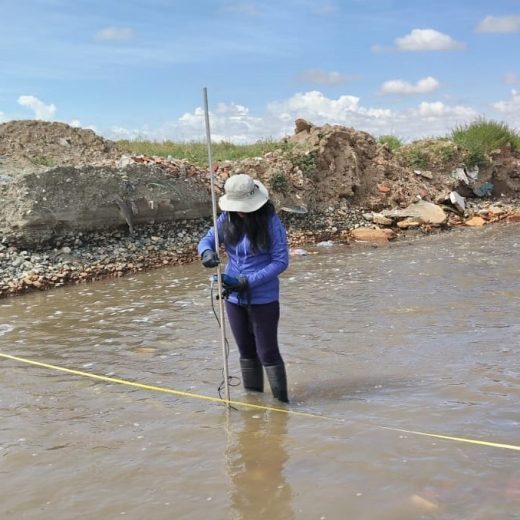
Jallurana Quispe Delia
Email: deliajq1310@gmail.com
STUDY TOPIC
Assessment of the Presence and Temporal Variation of Emerging Contaminants and Trace Elements in the Seke and Seco Rivers, El Alto, Bolivia
Preparatory Program: Master’s Degree in Chemical Sciences, UMSA
Project related to this study: ZakaBol (PI C. Duwig)
Host Laboratory/Laboratories: Laboratory of Hydrochemistry and Environmental Chemistry, Institute of Chemical Research (IIQ-UMSA)
Scientific Supervisors: Oswaldo Ramos Ramos, PhD, Céline Duwig, PhD, Eléonore Resongles, PhD
The Seco and Seke rivers, located in the city of El Alto, are subject to various anthropogenic pressures associated with urban, industrial, and mining activities. This study assesses the presence and temporal variation of emerging contaminants and trace elements during the late rainy season. The analysis includes emerging contaminants, such as pharmaceuticals, personal care products, and per- and polyfluoroalkyl substances (PFAS), as well as trace elements in water, suspended matter, and sediments. The study also incorporates physicochemical parameters, major ions, and total organic carbon. The results will help characterize the environmental quality of the rivers and improve understanding of the temporal dynamics of contaminants.
Dissemination of Research Findings (Seminar, Conference, Publication)
• Manuscript submitted to the Revista Boliviana de Química: “Temporal variations of metals and metalloids in the Seco and Seke rivers impacted by human activities Katari basin (Bolivia).”
Flores Marisol
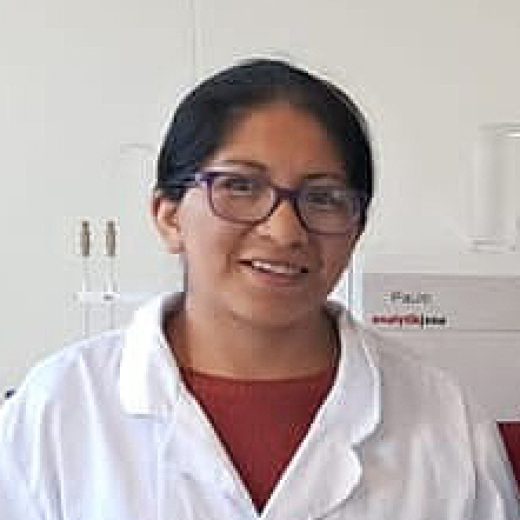
Flores Marizol
Email: marizol.flores@ird.fr
STUDY TOPIC
Metal Transport in Mining Basins in the Context of Climate Change: The Case of the Pilcomayo River (Bolivia)
Preparatory Program: PhD in Water Sciences, University of Montpellier
Project related to this study: FEF Pilcomayo (2024–2026), IRD ARTS Doctoral Fellowship
Host Laboratory/Laboratories:Institute of Chemical Research (IIQ), La Paz, Bolivia, and HydroSciences Montpellier (HSM), Montpellier, France
Scientific Supervisors: Eléonore Resongles and Oswaldo Ramos. PhD Supervisor: Corinne Casiot
Mining activities are responsible for significant environmental pollution through the release of metals and metalloids, particularly into aquatic systems (Macklin et al., 2023). South American countries are particularly vulnerable to mining-related pollution due to limited environmental regulation and monitoring. The transboundary Pilcomayo River basin is a prominent example. In Bolivia, the upper basin has been intensively exploited since the colonial period (16th century). Silver, lead, and zinc mining continues in the city of Potosí and farther south, in the Pilaya sub-basin, a major tributary of the Pilcomayo River, where tin, lead, zinc, and antimony are mined, along with more recent gold exploitation. Metal contamination in the river and its associated resources, particularly fish, is a major concern for downstream riparian communities. The lack of recent and reliable data on metal concentrations prevents an assessment of the current state of contamination.
Dissemination of Research Findings (Seminar, Conference, Publication)
• Bolivian National Congress of Ichthyology, La Paz, Bolivia, November 2025. Scientific poster presentation: “Assessment of Metal Concentrations in Two Fish Species, Prochilodus lineatus and Pimelodus albicans, from the Pilcomayo River (Villamontes, Bolivia).”
• One Water Summer School, Sète, France, July 2026. Scientific poster presentation: “Tracking Mining Contamination in the Pilcomayo River (Bolivia).”
Chavez Paco Nancy
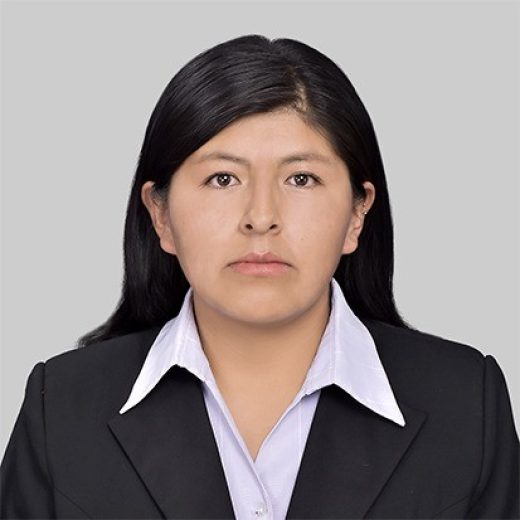
Chavez Paco Nancy
Email: nancylpbol@gmail.com
STUDY TOPIC
Assessment of Metal Contamination Levels in Agricultural Soils and Their Potential Mobility in Areas Affected by Mining Activities in the Department of Oruro, Bolivia
Preparatory Program: Master’s Degree in Chemical Sciences, UMSA
Project related to this study: WASACA, COSMOS
Host Laboratory/Laboratories: Environmental Chemistry and Hydrochemistry Laboratory, Institute of Chemical Research (IIQ–UMSA)
Scientific Supervisors: Eléonore Resongles
In general, this study focuses on the spatial assessment of various trace elements in agricultural soils within the Lake Poopó basin, specifically in sub-basins affected by active mining activities, including Huanuni, Poopó, Pazña–Antequera, and La Joya. The study assesses contamination levels of critical elements, such as lead, zinc, and antimony, among others, in relation to a local geochemical background value. Finally, after identifying the elements of greatest concern, their potential mobility from soil to plants is determined using the BCR sequential extraction protocol.
Dissemination of Research Findings (Seminar, Conference, Publication)
• Article under review in the Revista Boliviana de Química: “Determination of the Geochemical Background of Metals in Soils from Mining Areas: A Methodological Comparison in the Poopó Basin (Bolivia).”
Nina Mollisaca Leonor
Nina Mollisaca Leonor
Email: mollisacaninaleo@gmail.com
STUDY TOPIC
Temporal Dynamics of Metals in Water and Sediments of the Pilcomayo River under Different Hydrological Conditions at the Villa Montes Monitoring Station (Bolivia)
Preparatory Program: Master’s Degree in Chemical Sciences, UMSA
Project related to this study: FEF Pilcomayo (2024-2026)
Host Laboratory/Laboratories: Environmental Chemistry and Hydrochemistry Laboratory, Institute of Chemical Research (IIQ–UMSA)
Scientific Supervisors: Eléonore Resongles, Oswaldo Ramos
Mining activities in the Potosí region constitute a source of metals that can be transported to the Pilcomayo River through its tributaries. Although the use of tailings dams has reduced the direct discharge of contaminated particles, other sources, such as acid mine drainage and mining waste, persist. During periods of high river discharge, sediment resuspension and transport can promote the mobilization of these metals from the upper basin to the middle basin. This study assesses the temporal dynamics of metals in water and sediments of the Pilcomayo River at the Villa Montes monitoring station in Bolivia under different hydrological conditions over one year of monitoring. Metal concentrations were determined in the dissolved fraction, suspended matter, and sediments, as well as their distribution and transport in relation to variations in river discharge.
Dissemination of Research Findings (Seminar, Conference, Publication)
• Publication under review in the Revista Boliviana de Química, entitled: “Evolution of Metal Pollution in the Pilcomayo River from the Late 20th Century to the Present: Synthesis of the Bibliographic Evidence.”
Aguirre De la Quintana Ktlyn Valeria
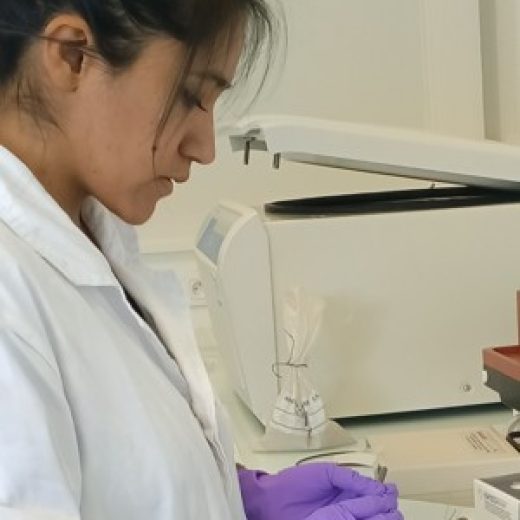
Aguirre De la Quintana Ktlyn Valeria
Email: ktlynag@gmail.com
STUDY TOPIC
Assessment of Potentially Toxic Trace Element Contamination in the Tissues of Prochilodus lineatus (Sábalo) and Pimelodus albicans (Catfish) from the Pilcomayo River, Bolivia
Preparatory Program: Master’s Degree in Chemical Sciences, UMSA
Project related to this study: Pilcomayo FEF
Host Laboratory/Laboratories: Institute of Chemical Research (IIQ–UMSA) and HydroSciences Montpellier (HSM)
Scientific Supervisors: Eléonore Resongles, Mauricio Ormachea
This study focuses on the assessment of potentially toxic metals and metalloids (As, Al, Cd, Cr, Fe, Hg, Mn, Pb, and Zn) in Pimelodus albicans and Prochilodus lineatus from the middle basin of the Pilcomayo River, Bolivia. Concentrations of these elements were determined in liver and muscle tissues of fish collected between Villa Montes and Crevaux. The results revealed distribution patterns of the elements between the two species and their tissues, with generally higher concentrations observed in the liver than in the muscle. Furthermore, the assessment of human health risks associated with the consumption of these fish species indicated that the estimated values were below the reference limits used for human health risk assessment.
Dissemination of Research Findings (Seminar, Conference, Publication)
• Poster presentation at the 3rd National Congress of Ichthyology (La Paz, Bolivia, 2025): “Assessment of Metal Concentrations in Two Fish Species, Prochilodus lineatus and Pimelodus albicans, from the Pilcomayo River (Villamontes, Bolivia).”
• Oral presentation at the 5th National Scientific Congress (La Paz, Bolivia, 2026): “Lead Levels in Prochilodus lineatus from the Pilcomayo River: Comparison of Historical and Current Data and Implications for Human Health Risk.”
• Article published in the Revista Boliviana de Química, 43, 91–102: “Lead Levels in Prochilodus lineatus from the Pilcomayo River: Comparison of Historical and Current Data and Implications for Human Health Risk.”
Tola Aguilar Diego Orlando Correo
Tola Aguilar Diego Orlando
Email: diego.tola-aguilar@ird.fr
STUDY TOPIC
Machine Learning and Remote Sensing to Predict Water Consumption and Crop Yields in the Bolivian Altiplano
Project related to this study: QUIMONOS (Quinoa monitoring by satellite)
Host Laboratory/Laboratories: ESPACE-DEV, University Montpellier, IRD – IHH (UMSA)
Scientific Supervisors: Dr. Frédéric Satgé
This research evaluated the use of machine learning (ML) and remote sensing to improve quinoa production management in the Bolivian Altiplano. Sentinel-1 and Sentinel-2 data, topographic variables, and satellite-derived products were integrated to predict soil properties, soil moisture, biomass, crop yield, and evapotranspiration. Random Forest and Gradient Boosting performed well in estimating soil and water-related variables, while the Stacking model showed greater stability in predicting biomass, crop yield, and water consumption. The results demonstrated that soil conditions, together with spectral and radar information, can help anticipate variability in crop yield and water consumption. Overall, this approach demonstrates the potential of integrating machine learning and remote sensing for timely agricultural monitoring and sustainable quinoa management in high-Andean ecosystems.
Dissemination of Research Findings (Seminar, Conference, Publication)
Conferences:
• VI National Congress and V Ibero-American Congress on Irrigation and Drainage — Peru (October 2026).
• I National Andean Grains Congress — Bolivia (October 2025).
• XXIV Latin American Congress of Soil Science — Bolivia (June 2025).
• XXI Brazilian Symposium on Remote Sensing — Brazil (April 2025).
• IX Bolivian Congress of Soil Science (September 2024).)
• IV National Geography Congress — Bolivia (April 2024).
Publications:
• Tola, D., Satgé, F., Pillco Zolá, R., Sainz, H., Condori, B., Miranda, R., Yujra, E., Molina-Carpio, J., Hostache, R., & Espinoza-Villar, R. (2024). “Soil Salinity Mapping of Plowed Agriculture Lands Combining Radar Sentinel-1 and Optical Sentinel-2 with Topographic Data in Machine Learning Models.” Remote Sensing, 16(18), 3456.
• Tola, D., Bustillos, L., Arragan, F., Chipana, R., Hostache, R., Resongles, E., Espinoza-Villar, R., Zolá, R. P., Uscamayta, E., Perez-Flores, M., & Satgé, F. (2025). “High Spatial Resolution Soil Moisture Mapping over Agricultural Field Integrating SMAP, IMERG, and Sentinel-1 Data in Machine Learning Models.” Remote Sensing, 17(13), 2129.
• Perez-Flores, M., Satgé, F., Molina-Carpio, J., Hostache, R., Pillco-Zolá, R., Tola, D., Uscamayta-Ferrano, E., Bustillos, L., Bonnet, M.-P., & Duwig, C. (2026). “Machine-Learning Crop-Type Mapping Sensitivity to Feature Selection and Hyperparameter Tuning.” Remote Sensing, 18(4), 563.
• Tola, D., Bustillos, L., Arragan, F., Patiño, M., Quispe, R., Almeida, T., Roig, H., Espinoza-Villar, R., Zolá, R. P., & Satgé, F. (2026). “A Cost-Effective Approach to Estimate Quinoa Aboveground Biomass Volume Combining UAV RGB Data with Sentinel-1 and Sentinel-2 Satellite Imagery.” Remote Sensing, 18(17), 3017.
Uscamayta Ferrano Elvis

Uscamayta Ferrano Elvis
Email: elvis.uscamayta@ird.fr
STUDY TOPIC
Satellite and In Situ Data Fusion via Machine Learning for Precipitation Downscaling in the Altiplano Region
Project related to this study: Wastewater Irrigation: A Sustainable Adaptation to Climate Change Across the Altiplano (WASACA)
Host Laboratory/Laboratories: Institute of Hydraulics and Hydrology (IHH–UMSA); Remote Sensing and Spatial Analysis Laboratory (UnB)
Scientific Supervisors: Fredéríc Satge
The low spatial resolution of precipitation data limits hydrological and climate studies in the Andean Altiplano. This study develops a machine learning-based downscaling methodology to generate monthly precipitation data at a 1 km spatial resolution for the period from 2004 to 2015. The CHIRPS, MSWEP, and IMERG satellite products were evaluated, with MSWEP selected as the baseline product. Thermal, atmospheric, topographic, and spatial variables were used in the XGBoost and CatBoost models. Both models demonstrated good performance. In the final data generation, CatBoost achieved a 34% reduction in RMSE and a 38% reduction in MAE. The methodology improved precipitation accuracy while preserving its temporal patterns. These results demonstrate its potential for hydrological studies, water resource management, and climate change analysis in the Altiplano.
Dissemination of Research Findings (Seminar, Conference, Publication)
• “Downscaling the CHIRTS Gridded Air Temperature Dataset by Integrating MODIS Land Surface Temperature Estimates into Machine Learning Models” — 21st Brazilian Symposium on Remote Sensing.
• “CHIRTS Gridded Air Temperature Downscaling Integrating MODIS Land Surface Temperature Estimates in Machine-Learning Models.”
Bustillos Peña Lautaro

Bustillos Peña Lautaro
Email: lautarobustillos80@gmail.com
STUDY TOPIC
Multiscale Data Integration (Drone, Sentinel-1/2) for the Integrated Monitoring of Biomass, Productivity, and Water Use Efficiency in Quinoa in the Bolivian Altiplano.
Project related to this study: Quinoa Monitoring by Satellite – QUIMONOS-2)
Host Laboratory/Laboratories:emote Sensing and Spatial Analysis Laboratory (LSRAE), Institute of Geosciences, University of Brasília
Scientific Supervisors: Dr. Frédéric Satgé
This research assesses the impact of water scarcity in the Bolivian Altiplano using multiscale remote sensing and machine learning to monitor biomass and water use efficiency (WUE) in quinoa crops. The methodology integrates three scales: at the local scale, drones equipped with ten-band multispectral sensors and LiDAR generate high-resolution biomass estimates; at the field scale, physiological and hydrological measurements taken during key growth stages calibrate water demand estimates; and at the regional scale, drone-derived estimates resampled to 10 m are used to train Random Forest and XGBoost algorithms with Sentinel-1/2 time series to map and assess regional agricultural vulnerability.
Dissemination of Research Findings (Seminar, Conference, Publication)
Publications:
• “High Spatial Resolution Soil Moisture Mapping over Agricultural Field Integrating SMAP, IMERG, and Sentinel-1 Data in Machine Learning Models.”
• “A Cost-Effective Approach to Estimate Quinoa Aboveground Biomass Volume Combining UAV RGB Data with Sentinel-1 and Sentinel-2 Satellite Imagery.”
Conferences:
• XXIV Latin American Congress of Soil Science: “High-Spatial-Resolution Soil Moisture Mapping over Agricultural Fields by Integrating SMAP, IMERG, and Sentinel-1 Satellite Data into Machine Learning Models.” Presented by Lautaro Bustillos, 2025.
Perez Mayra

Perez Mayra
Email: mayraperez5197@gmail.com
STUDY TOPIC
Effects of Climate Change and Land Use and Land Cover Dynamics on Groundwater Recharge in the Semiarid Altiplano Region
Project related to this study: WASACA, QUIMONOS
Host Laboratory/Laboratories: Institute of Environmental Geosciences (IGE), ESPACE-DEV
Scientific Supervisors: Celine Duwig and Frederic Satgé
My thesis examines the effects of climate change and land use dynamics on groundwater recharge in the semiarid region of the Bolivian Altiplano, using remote sensing tools and participatory approaches. My research aims to identify trends in water resource dynamics and understand their relationship with changes in land use. This work highlights sustainable management solutions tailored to the specific characteristics of these sensitive ecosystems, which face increasing climatic and anthropogenic pressures.
Dissemination of Research Findings (Seminar, Conference, Publication)
• Perez-Flores, M., Satgé, F., Molina-Carpio, J., Hostache, R., Pillco-Zolá, R., Tola, D., Uscamayta-Ferrano, E., Bustillos, L., Bonnet, M.-P., & Duwig, C. (2026). “Machine-Learning Crop-Type Mapping Sensitivity to Feature Selection and Hyperparameter Tuning.” Remote Sensing, 18(4), 563.
• Perez, M., Satgé, F., Molina, J., Hostache, R., Pillco, R., Uscamayta, E., Tola, D., Bustillos, L., and Duwig, C.: Sensitivity of machine-learning crop-type mapping to feature selection and hyperparameter tuning, EGU General Assembly 2026, Vienna, Austria, 3–8 May 2026, EGU26-928.
• Uscamayta-Ferrano, E., Satgé, F., Pillco-Zolá, R., Roig, H., Tola-Aguilar, D., Perez-Flores, M., Bustillos, L., Rakotomandrindra, F. P. M., Rabefitia, Z., & Carrière, S. D. (2025). CHIRTS Gridded Air Temperature Downscaling Integrating MODIS Land Surface Temperature Estimates in Machine-Learning Models. Atmosphere, 16(10), 1188.